Vancouver and Clark County
Shower Remodel in Vancouver, WA
Describe what is wrong with your shower and a local contractor will follow up.
Working with the shower you already have
Here is what a shower remodel in Vancouver, WA involves: an existing shower renovated in the place where it already stands. The drain stays put and the footprint stays the same. What changes is some or all of the parts: the walls, the floor of the shower, the valve and the enclosure. The first question is which of those parts have failed and which are only dated.
That question decides whether you need a partial update or a full rebuild, and it cannot always be answered from the surface. We are a referral service. Send us a request from Vancouver or elsewhere in Clark County and we pass it to an independent local contractor, who inspects the shower and gives you an estimate.
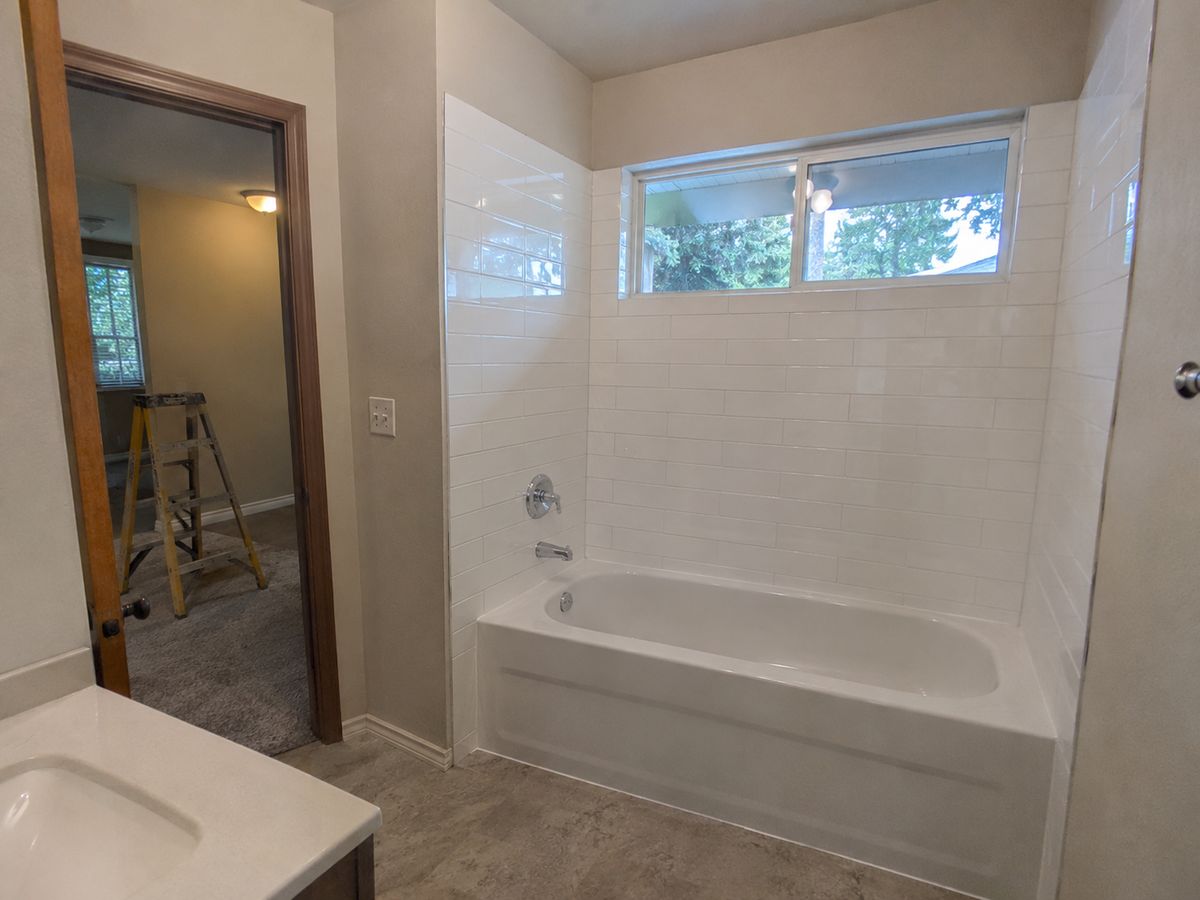
The parts of a shower and how they fail
A shower is several components that wear out at different rates. Looking at each one separately helps you and the contractor decide what can stay, what has to go, and whether replacing one part forces the replacement of another.
Failed walls
Tile and grout are not waterproof on their own. They are a finish, and the protection is the layer behind them. In many older showers that layer is weak or missing, with tile set over a board that softens when wet. The signs are loose or hollow-sounding tiles, grout that keeps cracking in the same place, and a wall that gives when pressed.
Regrouting or recaulking helps when the backing is still solid. It does not help when the board behind has broken down. In that case the walls come off to the framing and are rebuilt with a wet-area backing and a continuous waterproofing system before any new tile or panels go on.
Bases and pans
The floor of a shower is either a one-piece base or a tiled pan. One-piece bases crack, flex or discolor with age, and a cracked base cannot be repaired with any confidence. A tiled pan relies on a waterproof liner or membrane under the tile, sloped so water reaches the drain. When that layer fails or was never sloped, water sits in the floor.
Signs of a failing pan include a musty smell that returns after cleaning, dark grout at the floor edges that never dries, and staining on the ceiling below. A replacement pan is normally water tested before tile is set. Replacing the pan usually means removing the lower wall as well.
Valves and trim
The valve is the brass body inside the wall. The trim is the handle and plate you see. Older showers often have separate hot and cold handles with no protection against sudden temperature swings. Current valves are pressure-balancing or thermostatic, which hold the temperature steadier when a toilet flushes or a tap opens elsewhere in the house.
If the walls are being opened, replacing an old valve at the same time is sensible, because it will never be easier to reach. If the walls are staying, new trim can sometimes be fitted to the existing valve, but only when the manufacturer makes compatible trim for that valve body. The contractor's plumber can identify it.
Enclosures
Shower doors wear out before the shower does. Rollers stick, seals harden, frames corrode at the bottom track and old glass clouds. If the walls and base are sound, replacing only the enclosure is a reasonable small project. Options run from framed sliding doors to heavier frameless glass on hinges, and each fastens to the walls differently.
The order of work matters when more is being done. An enclosure is measured to the finished opening, so if you plan new tile, the glass comes last. Fitting new glass onto walls you intend to replace soon wastes the glass. Tell the contractor your longer plans so the work happens in a sensible order.
Hidden moisture
A shower can leak slowly for years without showing much on the surface. Water that gets behind the wall or under the pan soaks the framing and the subfloor, most often at the curb, the corners and around the valve. Vancouver's long damp season slows drying inside wall cavities, so a small leak has more time to cause damage.
The full extent is usually known only when the old finishes come off. That is why a shower remodel estimate often describes how damaged framing, subfloor or mold would be handled if found. Ask for that in writing before work starts, and ask to see anything the contractor uncovers before it is repaired and closed up.
Why Request Shower Remodel Through Us
An inspection before a recommendation
The contractor we refer looks at the walls, pan, valve and enclosure in person before advising a partial update or a full rebuild.
Local to Vancouver and Clark County
Your request is passed to an independent contractor who works in this area and contacts you to arrange a visit.
Your decision throughout
We only make the connection. You receive the contractor's estimate and choose whether to hire them, with no obligation to us.
How a shower remodel is carried out
- Assess each componentThe contractor checks the walls, floor, drain, valve and door for signs of failure and asks about any leaks or smells.
- Agree what staysYou decide together which parts are kept and which are replaced, and the estimate states how hidden damage would be handled.
- Open up and inspectThe parts being replaced are removed, and the framing and subfloor behind them are examined, dried and repaired as needed.
- Rebuild the wet layersNew backing, pan and waterproofing are installed and tested, and the valve is replaced while the wall is open.
- Finish and fit the enclosureTile or panels and trim are completed, the enclosure is measured and fitted to the finished opening, and the shower is tested.
Shower Remodel Questions
Can I just regrout instead of remodeling the shower?
Yes, if the tile is firmly attached and the backing behind it is dry and solid. Regrouting is a surface repair. If tiles are loose, the wall flexes or water is showing up elsewhere, new grout will not solve the cause.
Can new tile go over the old tile?
It is sometimes possible but rarely a good idea in a shower. It hides whatever is happening behind the old tile and builds the wall out at the valve and drain. Most contractors prefer to remove old finishes and rebuild the waterproofing.
Can the walls be replaced and the old base kept?
Sometimes, when the base is a one-piece unit in good condition with an intact wall flange. With a tiled pan it is harder, because the wall waterproofing and the pan liner overlap and are best replaced together.
How do I know if my shower is leaking into the wall?
Look for stains on the ceiling below or the wall behind the shower, baseboard that swells, flooring that lifts near the curb, or a persistent musty smell. A contractor can check further, but some leaks are confirmed only when the wall is opened.
Other Services in Vancouver, WA
- Bathroom Remodel
- Walk-In Shower
- Tub to Shower Conversion
- Tub Installation
- Full Bathroom Remodel
- Bathroom Remodel in Vancouver, WA
Towns We Take Requests From
Call for a Free Estimate
Tell us what you are seeing in your shower and how old it is. We will pass your request to an independent local contractor.